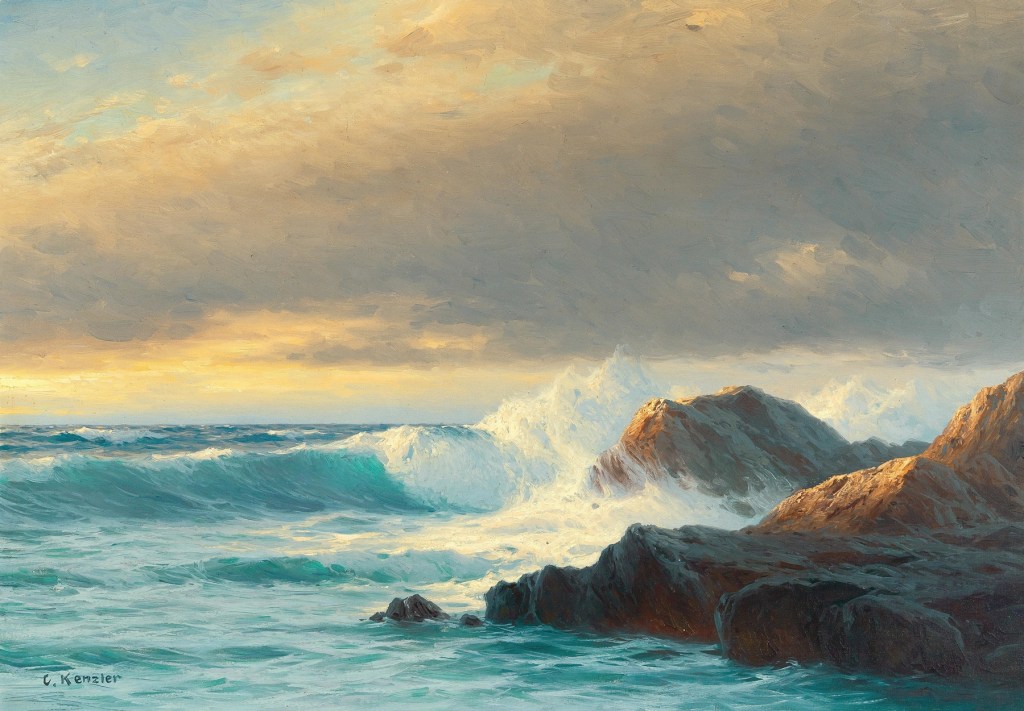
“Imagination is restricted to a world or an environment. Our world can be sculpted into anything, though it’s all interactable. How did that world become sculpted, without human interaction? A human imagined something after they interpreted it. A tree, not created by humans, though by nature, became involved in imaginative, fictional works, after interpretation.”
– Modern Romanticism
Art is a place of interpretation. It is not a place of duplication or copying an environment. A machine or an AI copies a human’s artistic style. A human creates something new through interpretation. An artist observes, and then that same artist makes. Human artists are not here to be machines or to be factories that are meant to bring forth quantity on an assembly line.
Genre fiction should be seen as this array of quantity. It’s a display of what’s been copied, repeatedly. Genres are divided to suit what’s called “a diverse range of audiences”. Although, genre fiction has no survival, without some kind of depiction of reality. This is because while genre fiction would depict a fantastical world, it requires its realistic and human characters for its readers to remember anything about what they’ve read. Whereas descriptions of a world could be repeated, though with a limitation involved. A reader would get bored of reading a literary work, if its purpose was to repeat descriptions of the same environment and setting.
If reality involves a story’s characters, there would be nothing but diversity within them. Within a book’s plot, there are characters having their own plots, centered around their personal experiences. These are human characters, having their own awareness of what’s around them. These are those human characters that a reader connects with. Readers connect with human characters, even if that character happens to be a ghoul or a witch, or some other fantastical being. For even if that character is unrealistic on the surface, their story can be something all too familiar and realistic for its understanding. A monster, at first glance, until being recognized as human like any other.
Genre fiction relies on its creation of a world, while literary fiction relies on its written characters. Literary fiction, relying on reality, would survive on its own. Although, genre fiction, having no crossover from literary fiction, would be rendered lifeless and boring to a reader. It can be understood the same way in viewing machines, made into a group, as they have no sense of awareness. Without awareness, there’s no direction and there is no purpose for their existence other than to just exist. What reader wants to feel as if they have to guide/do the work for the writer’s lifeless work? Isn’t the purpose of a work of fiction to guide its readers?
Connecting to a world has no meaning, without reality taking place in some sense of it. “Connecting to a world” would be a vague phrase, making one think that a person is connecting to their environment. How can this be done, without a requirement of human interaction? Meditation is exhibited, through this principle, though it involves a human interaction of healing, instead of destruction. Positive connection causes a person’s meditative state to become relaxed. Whereas negative connection has no meaning. Rather, it’s the absence of connection at all where there’s a loathsome feeling of emptiness.
 Modern Romanticism
Leave a Reply